General Information
- EV cable assembly and connectors are key components for the electric vehicles. It can connect all parts of the car, for example battery pack, motor, PDU, DCDC, AC, lights and so on, so that the EV can be driven safely and reliablelly.
- Our cable assemblies and connectors have all been applied to popular EVs in China, Korea and Japan. It has been proven to be good and reliable quality. Our customers include BYD EVs, GWM(Great Wall Motor) EVs, KingLong Buses and so on.
Our Products Include
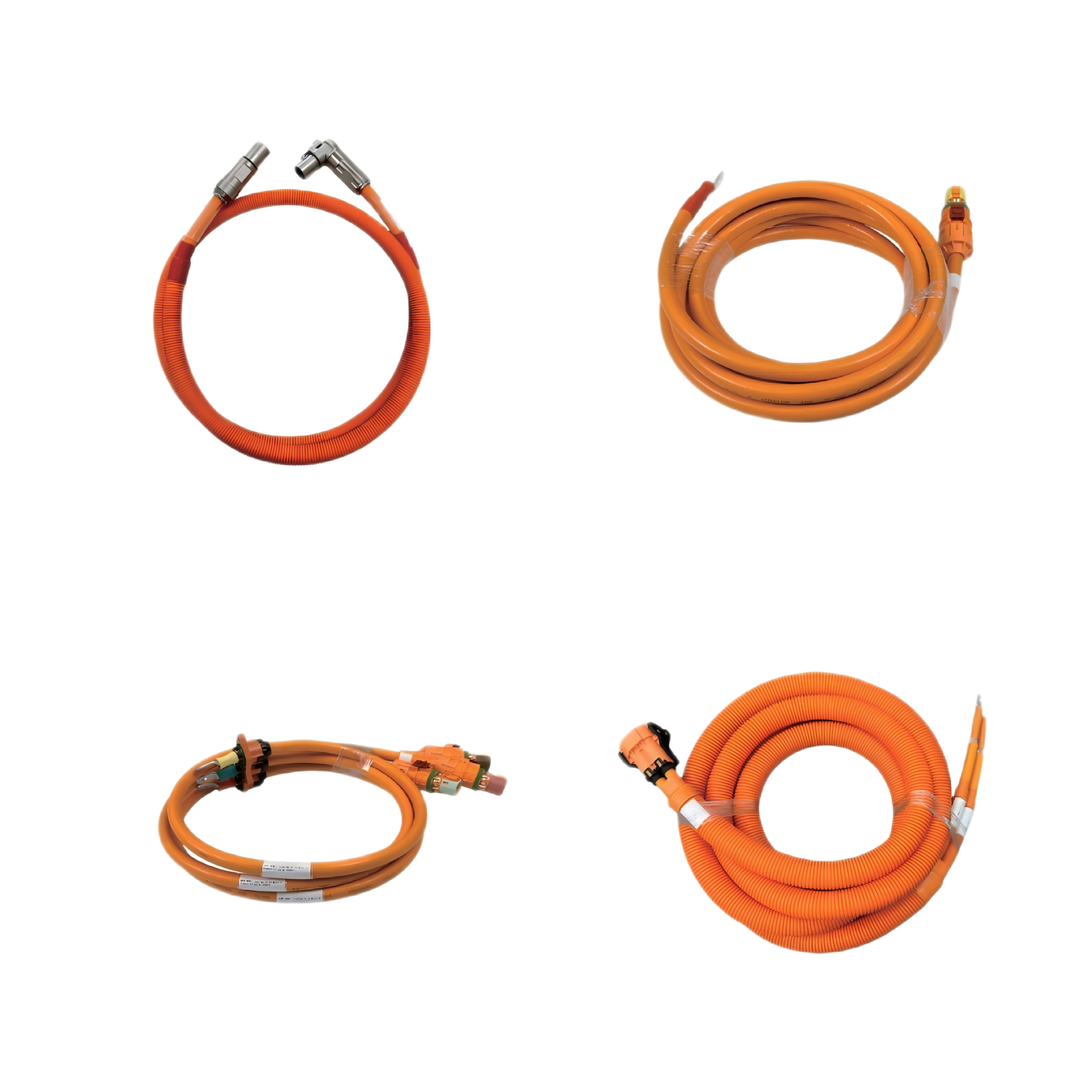
- EV Cable Assembly
- Battery Harness, connecting battery pack to pdu or high voltage junction box. It supplies the all system’s main power.
- MCU Harness, PDU to MCU (Motor Control Unit) harness to supply power to drive motor.
- Motor Phase Harness, from MCU to motor, to conduct 3 phases AC electricity to motor.
- Fast Charging Harness, from DC charging inlet to battery pack or PDU, bypassing on board charger(OBC), enabling high power charging.
- Slow Charging Harness, connecting AC charging interface to on board charger(OBC), to achieve slow charging process.
- HVAC Harness, means heating, ventilation, air conditioning harness, connecting from PDU to air compressor, ptc, air conditioning system.
- DCDC Harness, connecting from PDU to DCDC inverter, transferring the high voltage electricity to low voltage power, to charge the 12V or 24V small battery in the vehicle.
- Junction Box Harness, used to distribution power or transfer.
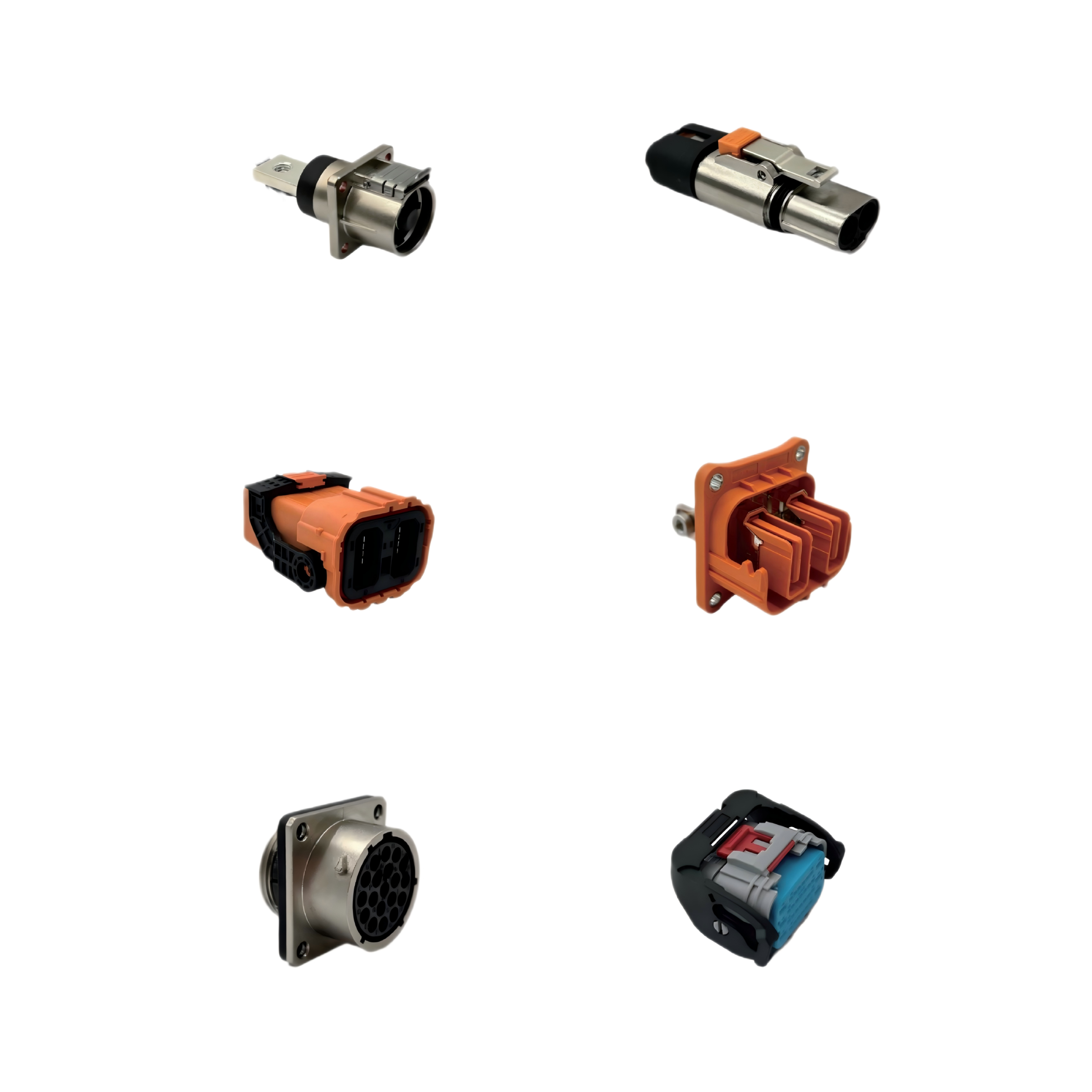
- EV Connector
- EV Metal Power and Signal Connector. Metal connectors offer a compact design with a small footprint, taking up less space. They are robust and durable, making them well-suited for harsh operating environments. In addition, metal connectors provide excellent EMC shielding performance. However, their main drawback is the higher cost. They are particularly suitable for commercial vehicles such as electric buses and electric trucks.
- EV Plastic Power and Signal Connector. Plastic connectors feature good insulation performance, lower cost, and shorter production lead times, making them ideal for high-volume applications. Another significant advantage of plastic connectors is that they align with the lightweighting requirements in future electric vehicles.
SMEs Friendly
Harnesses Customizable
Drawings Available
Efficient Part Selection
Lead Time 4 Weeks
Prompt Response
Trend For EV Cable Assembly and EV Connector
Four Major Future Trends for EV Wiring Harnesses and Connectors: High Voltage, Lightweighting, Intelligence, and Integration.
- High Voltage: Moving Toward “Kilovolt” Platforms
To meet the demands of ultra-fast charging, 800V high-voltage platforms have become widespread, and 1000V architectures are now being implemented. - Lightweighting: Large-scale Adoption of “Aluminum Instead of Copper”
Serving as the “blood vessels and nerves” of electric vehicles, the core trend for wiring harnesses is shifting from conventional, complex wiring to integrated, lightweight solutions. This enhances driving range and reduces costs. - Intelligence: Centralized Architecture and High-Speed Data
The evolution of the electrical/electronic (E/E) architecture from a “distributed” setup to a “central computing + zonal control” model is profoundly reshaping the wiring harness, leading to a significant reduction in its length.
Automotive Ethernet is becoming the backbone. To support the transmission of massive data (gigabytes per second) required for L3 and higher autonomous driving, automotive Ethernet wiring harnesses are becoming ubiquitous, offering transmission speeds of up to 10 Gbps. - Miniaturization and Integration
Miniaturization: To cope with the surge in the number of connectors inside a vehicle (600 to 1,000 per car), the pitch between connectors has been reduced to 0.3mm – 0.5mm.
Integration (Busbar): In compact spaces such as battery packs, highly conductive, flat-profile Busbars are replacing bulky traditional round wiring harnesses, enabling better space utilization and thermal management.

Email: sales01@microtechplus.com
Phone: +86-18860235884
Related Products: